CORPI
DI
REATO
A visual archaeology of
mafia phenomena in
Tommaso Bonaventura
Alessandro Imbriaco
contemporary Italy
Fabio Severo
corpi di reato
bonaventura imbriaco severo
Another Season
Representing the mafias today raises the problem of what image to give to a phenomenon that has changed its face over the years, after decades of bloody struggle against the State. The scenario has now changed drastically: for years the shifting strategies of criminal organisations have been under discussion, and people speak of a mafia that has almost stopped killing, blurred into civil society, prospering in a grey zone where the signs of its presence cannot be sought in violence alone. To think about how the mafia has been documented in photography over time leads inevitably to the memory of Letizia Battaglia’s images, the strongest example of visual chronicle and denunciation of Cosa Nostra’s crimes. Corpi di Reato was born of the need to look for a new image of the mafias, so that photographs might take in the sense of the change of era we are living through. Letizia Battaglia’s images represent a here and now, an accumulation of traumatic events that compose a picture of permanent conflict. Today, now that those weapons have in part been laid down and the clash with the State has shifted ground, there arises the need to give new meaning to the representation of territory and to the documentation of events. Rather than a sequence of occurrences, what emerged was the need to show a state of things, a set of conditions that characterise the diffuse forms of the mafias’ presence across Italian territory. Invisible mafia, white mafia, liquid mafia: many definitions have followed one another over the years to name these new forms of existence. Information about the mafia has itself long appeared fragmented, far from the front pages, in an age not of great tragic events but of a slow drip of episodes. There is no claim here to carry out an investigation or an inquiry into the facts, but rather the need to gather some of these events, to help carry them out of the disorder of the news, to let them exist momentarily in one and the same place. To use them as a map for travelling through the country, to bind the events to one another in order to bind together parts of the territory: a journey through Italy along the signs of mafia presence, through their visibility or invisibility. Viaggio in Italia is also the title of the celebrated book published in 1984 under the editorship of Luigi Ghirri, which went on to become the manifesto of the Italian school of landscape. That collective work of photographic exploration of the territory arose precisely from the need to rethink the representation of landscape, revealing the fascination of the anonymous everyday life of places, far from the picturesque and from the monumentality of cities. “The problem, then, was to stand before the landscape as an ignored place, and therefore marginalised, excluded”, wrote Carlo Arturo Quintavalle in the Appunti that opened the volume, “a search for the Italy of the margins, of ambiguity, of the fake, of the double, for an Italy substantially excluded, an Italy which is nonetheless the only one we know”. Corpi di Reato also begins by recalling the lesson of Viaggio in Italia, as condensed in Quintavalle’s words: to follow the traces of the mafias in our country means looking for forgotten, almost vanished places; it means coming upon anonymous streets in cities and provincial towns where today’s mafia bosses live as ordinary citizens; or else going back into the past, to the Medici castle where thirty years ago Raffaele Cutolo’s relatives reigned as sovereigns, in an age when bosses made a display of their power. Memory and present coexist in the places explored, in objects, in the landscape. Telling them apart, comparing them, becomes the task asked of photography. Ghirri’s lesson was that of recovering wonder before anonymous places, encountered on a journey with no obligatory route. Travelling in search of the signs of mafia presence sometimes means, instead, looking for one precise place — that street corner, that wheat field, that shutter — and then finding oneself before motionless spaces, before nothing; it means attempting to represent absence, emptiness. Remembering can then no longer mean commemorating; it becomes testimony to the transfiguration of things, it becomes the verification that a sign exists which refers back to what happened. The landscape sometimes appears wounded, at other times indifferent: it can reveal as it can lie, and photography’s task becomes to represent its ambiguity. The scar of illegal houses on the hill of Pizzo Sella looms over Mondello like a piece of criminal evidence, while the sunset falling over the Regi Lagni at Castel Volturno conceals the poisons deposited in the region’s watercourses. One feels the need to reveal the sound this stillness produces, to observe it in order to catch the slightest movement: to the point of trying to step outside the fixity of photography by using video as well, and through the moving image to suggest how a place might have looked before the extraordinary event that marked it forever, to represent the unwitting everyday before it is overwhelmed. Corpi di Reato seeks to go on exploring the many peripheries of Italian territory, peripheries that are geographical but also mental: places set at the margins, often forgotten episodes that have lost their meaning, victims of an oblivion that has made them an eternal present, as if without history.

corpi di reato
bonaventura imbriaco severo
works
CASE FILES OF THE 1986-1987 MAXI-TRIAL, CORLEONE, PALERMO, 2012
Held between 10 February 1986 and 16 December 1987 in the bunker courtroom of the Ucciardone prison in Palermo, the maxi-trial against Cosa Nostra, built by the anti-mafia pool founded by Antonino Caponnetto, saw 474 defendants committed for trial, 119 tried in absentia, 2,665 years of imprisonment handed down to 360 convicted men, as well as 19 life sentences imposed on various bosses including Michele Greco and the fugitives Salvatore Riina and
Bernardo Provenzano.
Anti-Mafia Movement (CIDMA), in
Corleone.
The trial at first instance required 349 hearings over 22 months, 35 days of deliberation and 6,901 pages for the drafting of the grounds of judgment. The later stages of appeal went on until 1992. The case files are held at the International Centre for Documentation on the Mafia and the
corpi di reato
bonaventura imbriaco severo
The Memory of Places
What memory do places keep of what has happened? Try going to Quarto, near Genoa, to see for yourself the rock from which the Thousand set out on their expedition; or to Via Caetani in Rome, where Aldo Moro’s lifeless body was abandoned inside a car. In both places there is a plaque, a monument, an object and an inscription, recalling what happened in that space years, decades, a century ago. Are places impervious to memory, or do they keep it as a mark within their own identity? It is hard to answer that question, and yet it has to be asked while looking at the photographs of the research project by Tommaso Bonaventura, Alessandro Imbriaco and Fabio Severo. They depict places where a mafia-related crime took place — hence the title of their work, “Corpi di Reato”, material evidence: a murder, a building speculation, a house where a fugitive lived, or where a mafioso still lives, an entire outlying district with a criminal clan embedded in it; or again: courtrooms, trial archives, bunkers, judicial exhibits, statues of murdered judges. They are all places, spaces, buildings, framed by a lens that seeks to point not only to a criminal act but also to a
this, and concluded that they could, and should, shift their attention onto the corpi di reato, that is, onto the landscape and onto places, supposing, rightly, that these preserve a memory, or at least a visible trace, of the criminal acts perpetrated there. They ventured into a zone of shadow, where things appear in their frailty, ambivalence, ambiguity. They entered the landscape inhabited by all of us, in order to draw from it visions of what has happened, and still happens. Here, then, is a playground on the outskirts of Milan, a space where children can wander freely, climbing up and down swings and slides, unaware — they and their parents alike — that toxic debris was buried beneath, or the residue of a speculation carried out by a mafia group. Or again, the fixing of a few concrete plinths at the bottom of a small valley: solitary sentinels documenting the attempt at a construction wanted by a clan, today under seizure and judicial investigation. A seemingly neutral place — the bed of a stream — disfigured by these
by Marco Belpoliti
cylinders that were to have carried a road.
If one looks carefully at the places photographed — a quarry, an apartment block, a row of tower blocks, a small villa, a road, a village, an isolated farmhouse, a historic monument — one realises that what the two authors want to fix, and submit to our visual scrutiny, are precisely ‘bodies’, certainly not of flesh and bone; rather, composed of inert matter — gravel, earth, concrete, glass, or something else again. They are living — or dying — parts of our landscape, which is the true body of the country, its physical form, as Pier Paolo Pasolini had understood. The poet described Italy as a living body, a pulsing reality, made up of villages perched on hilltops, cultivated fields, suburban housing blocks, football pitches, open spaces on riverbanks, sandbars and beaches. Italy is first of all its landscape, beautiful or ugly, it does not matter, a living reality upon which, over the last century and a half, the violating and virulent action of builders, speculators, gangsters, criminals, mafiosi and camorristi has come down.
visual presence: the mafia is here, around us.
Once, the photographs that portrayed this criminal association depicted high-profile murders and Sicilian landscapes: images that carried an oleographic element with them and confirmed commonplaces. They were photographs of custom and manners, settled into the gaze of the whole country. Then, after the massacres of the 1990s, the mafia left its familiar landscape — palms, olive groves, rocks, dry-stone walls, donkeys, flat caps, moustachioed men, women in black, portraits of fugitives, bandits, separatism and so on — and entered a
kind of invisibility.
As the authors write, this form of criminality — and other similar organisations too — has become a dispersed, multiform reality. It has changed its face, mingling and blurring ever more with the political and economic landscape of our country. Bonaventura and Imbriaco questioned themselves about
Marco Belpoliti—Writer and essayist
corpi di reato
bonaventura imbriaco severo
It is a landscape that Bonaventura, Imbriaco and Severo let run before our astonished eyes: country lanes, river estuaries, coastlines, headlands, ravines, mountains, cultivated fields, council chambers, paper depositories, entrances to public buildings, courtrooms, courtyards, illegal buildings, temporary structures, shacks, motorway junctions, gatehouses, bars, canteens, meeting rooms. In each of these spaces — open or closed — something happened that concerns us, that questions us, that disturbs us. And yet all these images offer us a vision of normality. They are anonymous shots. Even if in every photograph one senses a determination to look, and therefore to make visible, that seems to go beyond the image itself, normality seems to dominate everything. But these images are question marks. One feels interrogated by this everyday normality: do you know what happened here? Who lived in that little house? Who lives inside that building? Who uses this road every day? The invisibility of places and actions turns into a form of visual archaeology, which strikes us as we fix our eyes on the snapshots, and shakes us: is that not a quiet suburban street, so like the one I live in? And those houses, have I not seen them already? Have I not taken my son to a playground like that one? Recognising the places and spaces depicted as part of our own landscape takes photography out of its documentary function and makes it work as an alarm bell, shaking our indifference, our acquiescence. The mafia phenomenon can be photographed in this way, giving form to that “grey zone”, as Primo Levi called it, which surrounds us, and in which, willingly or not, we are immersed every day. The invisible has suddenly become visible, and inside those photographs, in that landscape,
there we all are. One need only look.

corpi di reato
bonaventura imbriaco severo
works
VIEW OF CORLEONE, PALERMO,
2012
For about forty years Corleone was the stronghold of the so-called Corleonesi clan, the architects, in the 1980s and 1990s, of the bloodiest mafia offensive against the Italian State. In a hearing in December 1992, the state witness Leonardo Messina described the rise of the Corleonesi like this: “They took over this system because they got into certain positions by elbowing their way in. Once they came
to power they slowly killed everybody. The trouble with these men is that they had everyone killed, often by us ourselves: one man killed his brother, another his brother-in-law, another his cousin, because he thought he would take his place. Instead, little by little, those men took over the system. The structures are still there, but in power there are their men, whom nobody voted for”.

la teoria del vuoto
corpi di reato
bonaventura imbriaco severo
works
VIEW OF SAN MARINO, 2012
The territory of the Republic of San Marino has for years been at the centre of investigations by the Italian judiciary, which have brought out the role of certain credit institutions as money-laundering centres for mafia organisations. This is what the report by Pier Luigi Maria Dell’Osso, adviser to the National Anti-Mafia Directorate, published at the beginning of 2012, states:
investigations, as the parties concerned have themselves admitted... It is therefore no great surprise that we should repeatedly find it impossible to obtain from San Marino judicial assistance worthy of the name”.
Marino, brought to light by investigative activity; an entrenchment of Italian and international criminal groups in the Italian territory bordering San Marino; the entry of San Marino intermediaries into Italy without the required authorisations, detected on the basis of investigative, banking-supervision and judicial activity; a persistent difficulty, if not a slowing down, of judicial cooperation in important
money-laundering investigations conducted by the
Italian authorities”.
“Besides, not being among the white-list banks entails carrying out all the obligations laid down by anti-money-laundering legislation for such cases, nor can it be maintained that San Marino is not at high risk of money laundering... It should be borne in mind, moreover, that none of the three San Marino police forces is able to carry out specific financial
The National Anti-Mafia Directorate has observed “systematic and substantial tax fraud in commercial exchanges between Italy and San


corpi di reato
bonaventura imbriaco severo
works
BORDER CROSSINGS OF THE REPUB
LIC OF SAN MARINO, 2012
The Republic of San Marino is an enclave within the Italian State, between the central-northern regions of Emilia-Romagna and Marche. Under the agreements concluded between Italy and San Marino there are no customs controls at the frontier, which makes the San Marino border extremely permeable to tax evasion and to the laundering of Italian and international money.

corpi di reato
bonaventura imbriaco severo
works
THE CARD PLAYERS, GALLERIA DE
GLI UFFIZI, FLORENCE, 2010
The Card Players is a painting by the Italian artist Bartolomeo Manfredi, dating from around 1620. The work was seriously damaged on the night between 26 and 27 May 1993 by the explosion of 250 kg of TNT hidden in a van parked in Via dei Georgofili, beneath one of the museum’s towers. The attack, which caused 5 deaths, 38 injuries and enormous damage to the Gallery, was carried out by Cosa Nostra
along with other subversive attacks in the early 1990s, striking several symbolic figures of the anti-mafia movement as well as the national artistic and cultural heritage, in order to undermine the credibility and strength of the institutions and force the government into negotiation.


corpi di reato
bonaventura imbriaco severo
installation view
Zephyr - Raum für Fotografie, Mannheim
27 April – 20 July 2014


corpi di reato
bonaventura imbriaco severo
works
VIEW OF THE SCAMPIA DISTRICT, NAPLES,
2013
The Vele are a housing complex built between 1962 and 1975 in the Scampia district of Naples. Over time they became a centre for drug dealing and for various forms of illegal activity run by several criminal families. The view was taken from a top-floor flat in Lot G on Via Labriola, identified by investigators as the operational base for the activities of the Vannella Grassi clan.

corpi di reato
bonaventura imbriaco severo
works
PIZZO SELLA HILL, PALERMO,
2012
Known as “the hill of dishonour”, in the 1970s a construction firm close to the family of the boss Michele Greco obtained permits to build some 170 houses on Pizzo Sella, which a ruling in 2001 judged illegal and ordered to be confiscated. In April 2012 the Court of Cassation revoked the confiscation, holding that the purchasers had acted
in good faith at the time, and therefore deeming them not liable to have their homes seized.

corpi di reato
bonaventura imbriaco severo
works
ABANDONED ROAD WORKS ON STATE ROAD 106, PALIZZI, REGGIO CALABRIA, 2011
Works placed under seizure in 2007 after the collapse of a tunnel, caused by the use of substandard concrete. The clans of the Ionian-Reggio ‘ndrangheta infiltrated the region’s public works contracts, exercising extensive control over every stage of the work, from the concrete cycle to hiring, site supplies, and subcontracting and equipment-hire procedures.


corpi di reato
bonaventura imbriaco severo
works
SFALLASSÀ VIADUCT, BAGNARA CA
LABRA, REGGIO CALABRIA, 2014
The Sfallassà viaduct is the highest thrust portal-arch bridge in the world. It stands near Bagnara Calabra, along the southern stretch of the A3 Salerno–Reggio Calabria motorway. Opened in 1974, the motorway was then subjected to modernisation works from 1997 onwards in order to widen it. Completion was initially due in 2003, a deadline later put back to
2013 and then to the end of 2014. The initial cost of the works was estimated at just under 6 billion euros, but has now passed ten billion. Several police investigations have revealed the infiltration of the ‘ndrangheta into the sites along the motorway, with various clans sharing out, over the years, the profits from rigged contracts, the corruption of
politicians and the blackmail of
construction firms.

corpi di reato
bonaventura imbriaco severo
works
THREATENING LETTER, LAZZARO, REG
GIO CALABRIA, 2012
Filippo Cogliandro is the chef of the restaurant “L’Accademia” on the seafront at Lazzaro. In 2008 he reported the extortion demands he had suffered at the hands of men of the Calabrian Barreca clan, helping to bring about the arrest of two members of the mafia family. “Cuckold, remember that pigs don’t live long”, reads one of the many threatening letters delivered to
Cogliandro at his restaurant.

corpi di reato
bonaventura imbriaco severo
works
TUFF QUARRY BETWEEN MAZARA DEL
VALLO AND MARSALA, TRAPANI, 2012
The illegal dumping of toxic waste in abandoned quarries is one of the criminal activities carried on for decades in the Trapani area, a region long under the “jurisdiction” of Matteo Messina Denaro, held to be the “boss of bosses” of Cosa Nostra, a fugitive from 1993 until his arrest in January 2023 and dead in September of the same year.

corpi di reato
bonaventura imbriaco severo
works
MOUTH OF THE REGI LAGNI, CASTEL
VOLTURNO, CASERTA, 2012
The Regi Lagni are a dense network of artificial canals extending over an area of more than 1,000 km², divided mainly between the provinces of Naples and Caserta. Conceived in the seventeenth century by the Bourbons as an irrigation system based on collecting the water of the basin, through the collusion of the camorra and the public administration they have been turned into a system for collecting
polluted water illegally discharged into
the canals.

corpi di reato
bonaventura imbriaco severo
works
BUCCINASCO PIÙ, BUCCINASCO,
MILAN, 2012
The Buccinasco Più development on the outskirts of Milan. Work began at the end of 2004; in 2005 the local police reported the presence of suspect materials, and in July 2008 men belonging to the Barbaro-Papalia clan were arrested. According to the judiciary, traces of hydrocarbons, asbestos cement, earth mixed with diesel oil, drive belts, waste and blocks of concrete were found in the
ground.
Contaminated soil was used as infill in the roads of the area and also for the playground of the Spina Verde development. The clans of the Lombard ‘ndrangheta entered the building sites behind the shield of companies belonging to the Lombard entrepreneur Maurizio Luraghi, convicted in 2010 of mafia association.


corpi di reato
bonaventura imbriaco severo
works
ILLEGAL DUMP UNDER SEIZURE,
DESIO, MONZA E BRIANZA, 2012
SAMPLE OF CONTAMINATED SOIL.
CASTEL VOLTURNO, CASERTA, 2013
In 2008 the public prosecutor’s office in Monza uncovered illegal waste trafficking at Desio, on a 30,000 m² site previously bought by affiliates of the Calabrian Iamonte-Moscato clan. The ground in the Via Molinara area, where several kinds of toxic waste are suspected to be present, is still under seizure today, awaiting funding for the clean-up operations.
The sample was collected by the Regional Agency for Environmental Protection in Campania (ARPAC) from contaminated ground on Via Veneto in Castel Volturno, province of Caserta. First used in the 2003 Ecomafia Report, the name Terra dei Fuochi — Land of Fires — denotes a vast area between the provinces of Naples and Caserta marked by a high rate of soil pollution and by
frequent burning of the huge quantities of waste illegally dumped by the camorra. An ARPAC report of 2011 identified an area of about three million square metres severely compromised by the massive presence of dioxin and by the leachate released from abandoned waste.


corpi di reato
bonaventura imbriaco severo
installation view
Zephyr - Raum für Fotografie, Mannheim
27 April – 20 July 2014

corpi di reato
bonaventura imbriaco severo
works
TIBERIO BENTIVOGLIO’S BAG,
REGGIO CALABRIA, 2012
Bentivoglio is the owner of “Sanitaria S. Elia”, a medical supplies shop in the San Giovannello district of Reggio Calabria. Subjected for twenty years to extortion demands and threats from the ‘ndrangheta, he has never agreed to pay protection money. On 9 February 2011 he was attacked in his orchard just outside Reggio by men of the
Condera clan: of the six shots fired at Bentivoglio, one bullet wounded him in the right leg, while a second aimed at his back was stopped by the bag he was carrying on his shoulder.

corpi di reato
bonaventura imbriaco severo
works
CONFESSIONAL OF THE PARISH CHURCH OF SAN GIOVANNI DI SAMBATELLO, REGGIO CALABRIA, 2012
Don Italo Calabrò was for years the parish priest of San Giovanni di Sambatello, from where he consistently denounced the oppression exercised by the ‘ndrangheta over people’s lives, until 1990, the year of his death. He often said that he had understood what the ‘ndrangheta was in the confessional of his church, where he listened to the accounts of the people of the district.

corpi di reato
bonaventura imbriaco severo
works
ALFONSO DIANA’S LIVING ROOM, CASAL
DI PRINCIPE, CASERTA, 2013
The house was seized from the camorra state witness Alfonso Diana and placed under the management of the Agrorinasce association. Shortly after the seizure it was vandalised by persons unknown. The damaging of property seized in connection with mafia activity is a common practice for which those responsible are rarely identified.

corpi di reato
bonaventura imbriaco severo
works
VIA MARIANO D’AMELIO 19-21, PALER
MO, 2012
Here Paolo Borsellino, Emanuela Loi, Agostino Catalano, Vincenzo Li Muli, Walter Eddie Cosina and Claudio Traina lost their lives on 19 July 1992, when a Fiat 126 loaded with 100 kilos of explosive was detonated as Borsellino and his escort were on their way to visit his mother.

corpi di reato
bonaventura imbriaco severo
works
FIAT CROMA, ROME, 2012
The car in which Giovanni Falcone and his wife Francesca Morvillo lost their lives on 23 May 1992 in the Capaci bombing, together with the three officers of their escort, Vito Schifani, Rocco Dicillo and Antonio Montinaro. The vehicle is kept at the Prison Police School in Rome.
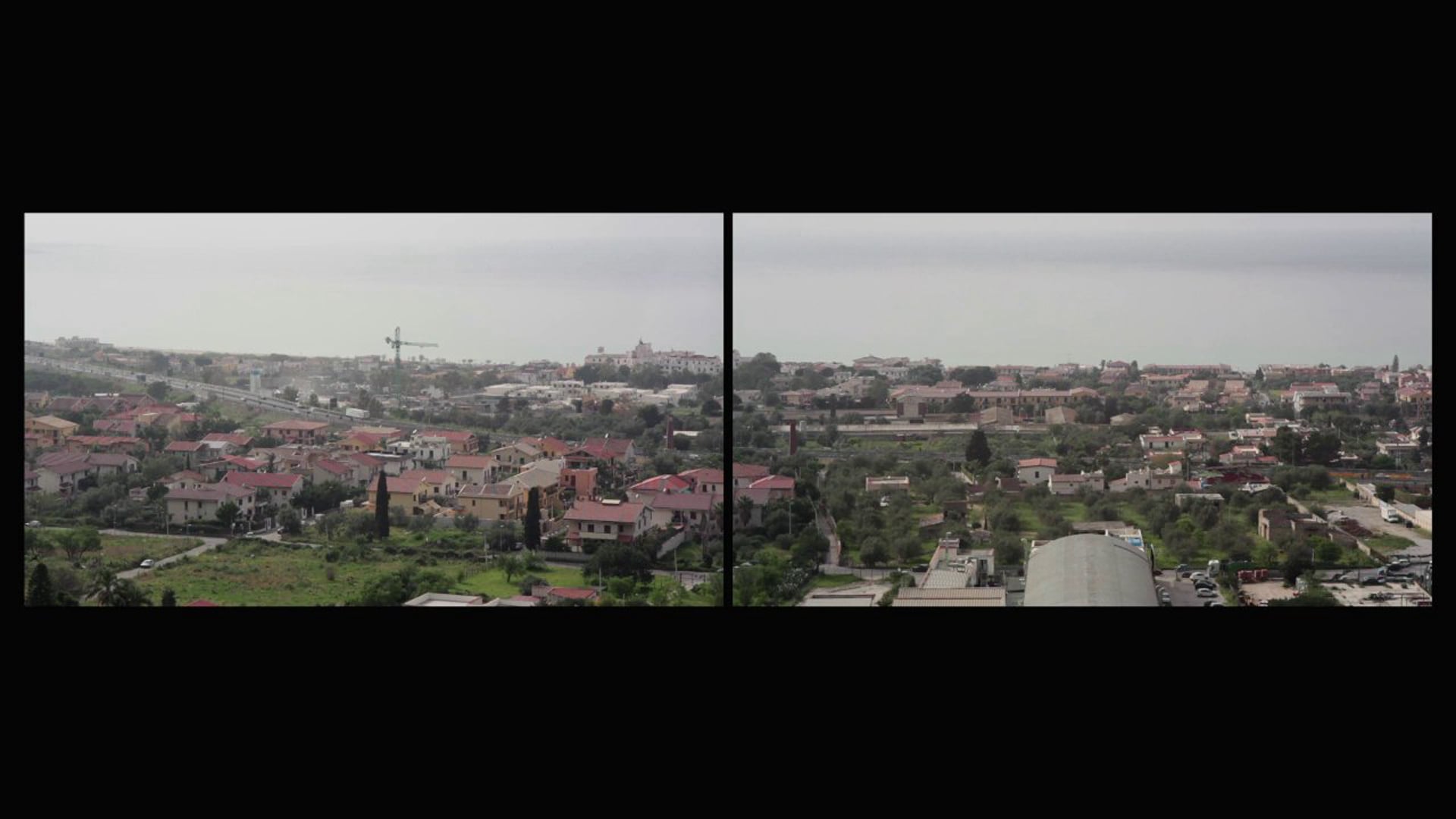
23 MAY 1992, CAPACI, PALERMO, 2012. VIDEO PROJECTION, 10’41”


corpi di reato
bonaventura imbriaco severo
works
VIDEO LINK
23 MAY 1992, CAPACI, PALERMO,
2012
The view from the hillside over the A29 Palermo–Mazara del Vallo motorway, from which on 23 May 1992 the Cosa Nostra boss Giovanni Brusca detonated 400 kg of TNT as the car carrying the magistrate Giovanni Falcone passed by. With him his wife Francesca Morvillo and the three officers of the escort, Vito Schifani, Rocco Dicillo and Antonio Montinaro, also lost their lives.


corpi di reato
bonaventura imbriaco severo
installation view
Zephyr - Raum für Fotografie, Mannheim
27 April – 20 July 2014


corpi di reato
bonaventura imbriaco severo
works
ANTONIO SCHIAVONE’S WARDROBE,
CASAL DI PRINCIPE, CASERTA, 2013
BOA CONSTRICTOR, PIGNATARO MAG
GIORE, CASERTA, 2015
The hiding place concealed behind the door of a wardrobe was discovered during the seizure of the house belonging to Francesco Schiavone’s brother, Antonio. The flat is on Via Bologna in Casal di Principe, opposite another house confiscated from the Schiavone family.
An eighteen-year-old boa constrictor, used as a mafia-style intimidation. The snake was found by a 58-year-old man who wishes to remain anonymous. Threatened by the camorra, in 2014 he found his car at Villa Literno with the window smashed in and the boa on the back seat. After he reported it to the carabinieri, the animal is today cared for and kept by Dog’s Town at Pignataro Maggiore.


corpi di reato
bonaventura imbriaco severo
works
COURTYARD OF POGGIOREALE
PRISON, NAPLES, 2014
HALL OF THE MEDICI CASTLE OF
OTTAVIANO, NAPLES, 2012
The Naples prison is one of the Italian prisons where the hard-regime detention of article 41 bis has been applied, provided for a number of offences including terrorism and mafia association. Inside Poggioreale, in the 1970s, the boss Raffaele Cutolo founded the Nuova Camorra Organizzata, one of the most powerful camorra organisations of the 1980s.
In 1980 the boss Raffaele Cutolo bought the Medici Castle of Ottaviano, which became his residence and the headquarters of the Nuova Camorra Organizzata. The castle (also known as the Palazzo del Principe) was confiscated in 1991 and placed under the management of the municipality of Ottaviano. In 2003 it became the seat of the Vesuvius
Thousands of mafiosi have been held at Poggioreale since it opened in 1914; according to the Italian Department of Prison Administration, at the end of 2013 Poggioreale was the most overcrowded prison in Europe, with 2,700 people held inside it.
Cutolo’s sister kept the accounts of the criminal activities of the local chiefs and saw to the legal and financial support of the families of those under arrest. She also kept a detailed list of members, hidden in a niche cut into a wall of the castle and covered by a painting.
National Park. It was here that

corpi di reato
bonaventura imbriaco severo
works
ARCI CLUB ‘FALCONE E BORSEL
LINO’, PADERNO DUGNANO, MILAN, 2012
Here, on 31 October 2009, the 22 heads of the Lombard ‘ndrine met to elect Pasquale Zappia as the new representative of the Lombard ‘ndrangheta. The meeting was filmed by the police in the course of the operations of the “Infinito” investigation.

corpi di reato
bonaventura imbriaco severo
works
EX-SERVICEMEN AND VETERANS’ COOPERATIVE CLUB, SAN VITTORE OLONA, MILAN, 2012
In this club, on 9 July 2008, Carmelo Novella, then head of the Lombard ‘ndrangheta, was murdered by two killers sent by the Reggio leadership in response to the autonomist ambitions Novella had shown. The killing was the starting point of the “Infinito” investigation, which in 2011 led to the arrest of some 300 members of the Lombard wing of the ‘ndrangheta.

corpi di reato
bonaventura imbriaco severo
works
SANCTUARY OF THE MADONNA DI POL
SI, SAN LUCA, REGGIO CALABRIA, 2011
Every year in autumn the bosses of the ‘ndrangheta from all over Italy and from abroad gather near this twelfth-century sanctuary hidden in the Aspromonte near San Luca, one of the main strongholds of the Calabrian mafia. The first accounts of mafia gatherings at the Madonna di Polsi date back to 1903.


corpi di reato
bonaventura imbriaco severo
works
VIEW OF BARDONECCHIA, TURIN, 2014
In 1995 Bardonecchia became the first municipality in northern Italy to be dissolved for mafia infiltration, after the discovery of the involvement of the ‘ndrangheta boss Rocco Lo Presti in the construction of the Campo Smith housing complex, a winter holiday residence. Born in the province of Reggio Calabria, Lo Presti had been transferred to
Bardonecchia in 1963 under a regime of enforced residence on suspicion of mafia membership. For about forty years Lo Presti expanded the presence of the Calabrian clans in the region, infiltrating road haulage, catering and above all construction and the supply of illegal labour. In 1972 he was joined by Francesco Mazzaferro, one of the leading Calabrian
bosses to have operated in Piedmont. Together they went on expanding the clans’ influence through money laundering, usury and intimidation. Convicted for the first time in 1982 for the kidnapping and murder of a building contractor, Lo Presti died in January 2009, the day after a final conviction for mafia-type criminal association aimed at usury was upheld.

corpi di reato
bonaventura imbriaco severo
works
COUNCIL CHAMBER OF THE TOWN OF
MARCIANISE, CASERTA, 2008
More than 200 municipalities in Italy have been dissolved for mafia infiltration since 1991, the year in which the legislation against mafia presence within local administrations was approved. In the first half of 2012 alone, the dissolution of 18 municipalities was decreed, three times the six local administrations placed under commissioners in 2011 and in 2010 respectively. In 2012 cases of mafia
infiltration emerged in some municipalities of northern Italy, such as Ventimiglia and Bordighera in Liguria and Leini in Piedmont. Before these episodes, the only case in the north had been Bardonecchia, in the province of Turin, in 1995.


corpi di reato
bonaventura imbriaco severo
installation view
Zephyr - Raum für Fotografie, Mannheim
27 April – 20 July 2014

corpi di reato
bonaventura imbriaco severo
works
ENTRANCE SHAFT TO A BUNKER, PLA
TÌ, REGGIO CALABRIA, 2015
Platì is a municipality of about 3,500 inhabitants in the province of Reggio Calabria which has historically had among the highest concentrations of bunkers belonging to ‘ndrangheta clans. Dozens of hiding places, tunnels and escape routes have been found in the town, built over the years by a genuine clandestine category of specialised labour, the so-called “bunkeristi”.
At the beginning of 2015 the long-sought fugitive Natale Trimboli, one of the brothers heading the most powerful local clan, was arrested, and since February of this year police investigations have established that for the first time the town is free of fugitives, with no wanted man any longer hidden in its underground passages.


corpi di reato
bonaventura imbriaco severo
works
BUNKER FOUND ON VIA PROVIN
CIALE 2, REGGIO CALABRIA, 2015
SAVERIO TRIMBOLI’S BUNKER, PLA
TÌ, REGGIO CALABRIA, 2014
The bunker where in February 2010 the carabinieri of the Provincial Command of Reggio Calabria arrested Saverio Trimboli, a member of the ‘ndrina of the same name. Wanted since 1994 for international drug trafficking, Trimboli was on the list of Italy’s 100 most dangerous fugitives drawn up by the Ministry of the Interior.

corpi di reato
bonaventura imbriaco severo
works
BUNKER FOUND ON VIA ARIELLA,
PLATÌ, REGGIO CALABRIA, 2015

corpi di reato
bonaventura imbriaco severo
works
VIA BOITO, GIUSSANO, MONZA E
BRIANZA, 2014
The “Infinito” maxi-trial against the ‘ndrangheta families infiltrated into Lombardy revealed that on Via Boito in Giussano, 30 km north of Milan, the family of the boss Antonio Stagno owned several flats, used as homes for various affiliates and as the venue for meetings of the clan’s leadership. The flats were connected to one another by tunnels and bunkers.


corpi di reato
bonaventura imbriaco severo
works
VIEW FROM THE PIZZERIA WALL STREET, LECCO, 2014 VIEW FROM THE BALCONY OF GAETANO BADALAMENTI’S HOUSE, CINISI, PALERMO, 2012
Between the mid-1980s and the early 1990s the Wall Street pizzeria was one of the main bases of the Lombard mafia headed by Franco Coco Trovato, a Calabrian boss who had moved to the province of Lecco in the 1960s. Trovato was sentenced to life imprisonment in 1992, following the investigation named Wall Street after the pizzeria of the same name that he owned. At the
Mafia boss of Cinisi and leader of the Cosa Nostra commission in the 1970s, Badalamenti died in 2004 in a prison in the United States while serving a 45-year sentence for drug trafficking. In 2002 the Italian court had sentenced him to life imprisonment for the murder of Giuseppe Impastato in 1978. His house in Cinisi was donated to the Centro Impastato in 2010.
trafficking in drugs and weapons, extortion and 17 murders: the first-instance verdict came in 1997, with 130 convictions, 1,700 years of imprisonment in total and assets confiscated to the equivalent of 15 million euros.
heart of the trial were billion-lira

corpi di reato
bonaventura imbriaco severo
works
VIEW FROM THE MEDICI CASTLE, OT
TAVIANO, NAPLES, 2012
In 1980 the boss Raffaele Cutolo bought the Medici Castle of Ottaviano, which became his residence and the headquarters of the Nuova Camorra Organizzata. The castle (also known as the Palazzo del Principe) was confiscated in 1991 and placed under the management of the municipality of Ottaviano. In 2003 it became the seat of the Vesuvius National Park.


corpi di reato
bonaventura imbriaco severo
works
VIEW FROM THE TERRACE OF FRANCESCO SCHIAVONE’S HOUSE, CASAL DI PRINCIPE, CASERTA, 2013
VIEW FROM THE BELFIORE FAMILY’S FARMHOUSE, SAN SEBASTIANO DA PO, TURIN, 2014
Nicknamed Sandokan, Francesco Schiavone was the most powerful leader of the Casalesi camorra clan until his arrest in 1998. At the conclusion of the Spartacus trial in 2008 he was definitively sentenced to life imprisonment. After the confiscation, the house on Via Bologna in Casal di Principe was assigned to the Agrorinasce association, which in 2009
In the 1980s and 1990s the Belfiore ‘ndrangheta clan was the main nucleus of mafia power in the province of Turin. The farmhouse they owned, confiscated in 2007, was named after the Chief Prosecutor of Turin, Bruno Caccia, killed in 1983, for whose murder the boss Domenico Belfiore was sentenced to life imprisonment as the sole instigator.
appointed as managing body the association La Forza del Silenzio, a care centre for children with autism.

corpi di reato
bonaventura imbriaco severo
works
VIA IV NOVEMBRE, ROME, 2014
The view from no. 98 Via IV Novembre, in the historic centre of Rome. The building was seized in 1994 from the camorra boss Michele Zaza, and in 2005 it became the national headquarters of the anti-mafia association Libera.

corpi di reato
bonaventura imbriaco severo
works
VIEW FROM FRANCO COCO TROVATO’S
HOUSE, GALBIATE, LECCO, 2014
Franco Coco Trovato was one of the heads of the ‘ndrine of the Lecco and Milan areas between the 1980s and the 1990s. A Calabrian who had moved to the province of Lecco in the 1960s, Trovato was sentenced to life imprisonment in 1992. The house where he lived at Galbiate has become a day centre for the elderly run by the L’Arcobaleno cooperative.


corpi di reato
bonaventura imbriaco severo
installation view
Zephyr - Raum für Fotografie, Mannheim
27 April – 20 July 2014

corpi di reato
bonaventura imbriaco severo
works
BROCHURE OF THE CASTLE OF MIASINO,
NOVARA, 2014
About 50 km north of Novara stands the nineteenth-century castle of Miasino, owned by the family of the camorra boss Pasquale Galasso. Although definitively confiscated, his relatives continue to use it to host ceremonies and events through a company registered in the name of Galasso’s wife, who has never been the subject of judicial investigation.

corpi di reato
bonaventura imbriaco severo
works
HOTEL CASTELSANDRA, CASTELLABA
TE, SALERNO, 2013
Built in the heart of the Cilento park, the hotel was seized in 1992 after investigations established that it was the property of the Nuvoletta camorra clan. The complex comprises a five-storey hotel, twenty-five small villas spread across the surrounding area, a swimming pool and a green space, which have remained abandoned ever since, awaiting approval of the plan for the
demolition of the illegal part and the architectural redevelopment of the rest of the complex.

corpi di reato
bonaventura imbriaco severo
works
BAR, VIA DEL TRAFORO, ROME, 2014
In January 2014 police and carabinieri seized 28 restaurants and assets worth around 250 million euros in the centre of Rome for activities linked to money laundering, among them Friend’s Bar on Via del Traforo, near Piazza di Spagna. In 2013, 383 assets were taken from mafia organisations in the city of Rome, the seventh province in Italy for the number of businesses and properties confiscated.


corpi di reato
bonaventura imbriaco severo
works
BAR, VIA GIULIO CESARE, ROME, 2013
ZIO CIRO, VIA ZANARDELLI, ROME,
2014
Bar, Via Giulio Cesare, Rome, 2013 The Cami coffee bar on Via Giulio Cesare, a few steps from Vatican City, was seized in 2009 because it was registered in the names of people close to Vincenzo Alvaro, one of the bosses who run the commercial activities of the Calabrian mafia in Rome. In recent years dozens of premises have been seized in the historic centre of the capital, one of the
The Zio Ciro pizzeria on Via Zanardelli, a few steps from Piazza Navona, was seized in 2014 because it was registered in the names of people close to the Contini camorra clan.
principal marketplaces for the laundering of
organised crime’s dirty money.

corpi di reato
bonaventura imbriaco severo
works
CAFÈ DE PARIS, VIA VENETO, ROME,
2013
Founded in 1956 and regarded as the symbol of Rome’s Dolce Vita, in 2009 the café was placed under seizure after investigations by the Guardia di Finanza and by the ROS carabinieri identified the involvement in its ownership of the Alvaro ‘ndrangheta clan. The café then reopened in 2011, placed under the administration of the National Agency for the
Administration and Allocation of
Confiscated Assets.

corpi di reato
bonaventura imbriaco severo
works
VIA SALIERI, BUCCINASCO, MILAN,
2012.
On 19 August 2004, in a wooded area near the municipal allotments of Buccinasco, between Via Salieri, Via Archimede and the Tangenziale Ovest, two Zolja M80 64 mm rocket launchers were found, one of them loaded. At the time of the discovery one of the hypotheses that emerged from the investigation was that the rocket launchers were to have been used for an attack on the then deputy prosecutor Alberto Nobili, one
of the leading figures in the fight
against organised crime in northern Italy.


corpi di reato
bonaventura imbriaco severo
installation view
Zephyr - Raum für Fotografie, Mannheim
27 April – 20 July 2014


corpi di reato
bonaventura imbriaco severo
installation view
Zephyr - Raum für Fotografie, Mannheim
27 April – 20 July 2014


corpi di reato
bonaventura imbriaco severo
publications
View of the Scampia district,
Le Vele, a housing complex built between
1962 and 1975 in the Scampia district of Naples.
Corpi di Reato. A visual archaeology of mafia phenomena in contemporary Italy.
Corpi di Reato
01
The utopia of the radiant city has become a centre of illegal activity controlled by the clans. The vantage point, suggested by the police, is a top-floor flat in Lot G on Via Labriola: a place already considered the operational base of the criminal activities of the Vannella Grassi clan.
Naples
2013
A project by Tommaso Bonaventura Alessandro Imbriaco Fabio Severo
Book design
Tomo Tomo
Printed in Italy by 5M, Rome
April 2018
Edition of 300 copies
01
ISBN 978-88-903720-3-2
01 View of the Scampia district 02 Hotel Castelsandra. 03 Alfonso di Diana’s living room MuFoCo Museo di Fotografia Contemporanea, 2018


corpi di reato
bonaventura imbriaco severo
publications
TAT / ORT (Un)heimliche Spuren der Mafia
ZEPHYR Raum für Fotografie, Mannheim, 2014


corpi di reato
bonaventura imbriaco severo
installation view
Case files of the 1986-1987 maxi-trial, Corleone, Palermo, 2012
Inkjet print, 95x175 cm
View of Corleone, Palermo, 2012
Inkjet print, 142x198 cm


corpi di reato
bonaventura imbriaco severo
installation view
Border crossings, Republic of San Marino, 2012
3 inkjet prints, 50x35 cm each
View of San Marino, Republic of San Marino, 2012
Inkjet print, 142x198 cm


corpi di reato
bonaventura imbriaco severo
installation view
View from the balcony of the Centro Impastato, formerly Gaetano Badalamenti’s house, Cinisi, Palermo, 2012. Inkjet print, 75x100 cm
Buccinasco Più, Buccinasco, Milan, 2012
Inkjet print, 75x100 cm


corpi di reato
bonaventura imbriaco severo
installation view
View from the Pizzeria Wall Street, Lecco, 2014
Inkjet print, 50x35 cm
View from the terrace of Francesco Schiavone’s house, Casal di Principe, Caserta, 2013 Inkjet print, 135x180 cm


corpi di reato
bonaventura imbriaco severo
installation view
Via IV Novembre, Rome, 2014
Inkjet print, 75x100 cm
Cafè de Paris, Via Veneto, Rome, 2013
Inkjet print, 120x160 cm


corpi di reato
bonaventura imbriaco severo
installation view
Abandoned road works on State Road 106, Palizzi, Reggio Calabria, 2011. Inkjet print, 97x130 cm
Tuff quarry between Mazara del Vallo and Marsala, Trapani, 2012
Inkjet print, 97x130 cm


corpi di reato
bonaventura imbriaco severo
installation view
Courtyard of Poggioreale prison, Naples, 2014
Inkjet print, 50x50 cm
View from the Medici Castle, Ottaviano, Naples, 2012
Inkjet print, 120x160 cm


corpi di reato
bonaventura imbriaco severo
installation view
Illegal dump under seizure, Desio, Monza e Brianza, 2012. Inkjet print, 120x160 cm
Hall of the Medici Castle of Ottaviano, Naples, 2012
Inkjet print, 120x160 cm
corpi di reato
bonaventura imbriaco severo
list of works
1. View of Corleone, Palermo, 2012. Inkjet print, 142x198 cm 2. View of San Marino, Republic of San Marino, 2012. Inkjet print, 142x198 cm 3. View of the Scampia district, Naples, 2013. 2 inkjet prints, 142x198 cm each 4. View from the terrace of Francesco Schiavone’s house, Casal di Principe, Caserta, 2013. Inkjet print, 135x180 cm 5. View of Bardonecchia, Turin, 2014. Inkjet print, 135x180 cm 6. Via Salieri, Buccinasco, Milan, 2012. Inkjet print, 135x180 cm 7. Bar, Via Giulio Cesare, Rome, 2012. Inkjet print, 135x180 cm 8. Bar, Via del Traforo, Rome, 2013. Inkjet print, 135x180 cm 9. Case files of the 1986-1987 maxi-trial, Corleone, Palermo, 2012. Inkjet print, 95x175 cm 10. Cafè de Paris, Via Veneto, Rome, 2013. Inkjet print, 120x160 cm 11. Via Padre Luigi Monti, Milan, 2012. Inkjet print, 120x160 cm 12. Via Boito, Giussano, Monza e Brianza, 2014. Inkjet print, 120x160 cm 13. View from the Medici Castle, Ottaviano, Naples, 2012. 2014. Inkjet print, 120x160 cm 14. Illegal dump under seizure, Desio, Monza e Brianza, 2012. Inkjet print, 120x160 cm 15. Pizzo Sella hill, Palermo, 2012. Inkjet print, 120x160 cm 16. Hall of the Medici Castle of Ottaviano, Naples, 2012. Inkjet print, 120x160 cm 17. Litorale Domitio Flegreo. Castel Volturno, Caserta, 2011. 2 inkjet prints, 97x1630 cm each 18. The Card Players, Galleria degli Uffizi, Florence, 2010. Inkjet print, 97x130 cm 19. Abandoned road works on State Road 106, Palizzi, Reggio Calabria, 2011. Inkjet print, 97x130 cm 20. Tuff quarry between Mazara del Vallo and Marsala, Trapani, 2012. Inkjet print, 97x130 cm 21. View from the Pizzeria Wall Street, Lecco, 2014. Inkjet print, 75x100 cm 22. Via IV Novembre, Rome, 2014. Inkjet print, 75x100 cm 23. Buccinasco Più, Milan, 2012. Inkjet print, 75x100 cm 24. View of Case Rosse, Milan, 2011. Inkjet print, 75x100 cm 25. View from the balcony of the Centro Impastato, formerly Gaetano Badalamenti’s house, Cinisi, Palermo, 2012. Inkjet print, 75x100 cm 26. ARCI club “Falcone e Borsellino”, Paderno Dugnano, Milan, 2012. Inkjet print, 75x100 cm 27. Sample of contaminated soil. Castel Volturno, Caserta, 2013. Inkjet print, 50x50 cm 28. Ex-servicemen and Veterans’ Cooperative Club, San Vittore Olona, Milan, 2012. Inkjet print, 75x100 cm 29. “La Forza del Silenzio” community centre, Casal di Principe, Caserta, 2013.
corpi di reato
bonaventura imbriaco severo
list of works
print, 50x35 cm 59. View from Bruno Iaria’s villa, Cuorgnè, Turin, 2014. Inkjet print, 50x35 cm 60. Trevi Fountain, Rome, 2014. Inkjet print, 50x35 cm 61. Via Torino, Volpiano, Turin, 2014. Inkjet print, 50x35 cm 62. View from Bernardo Provenzano’s house, Corleone, Palermo, 2012. Inkjet print, 50x35 cm 63. Via Salgari, Cuorgnè, Turin, 2014. Inkjet print, 50x35 cm 64. View from Franco Coco Trovato’s house, Galbiate, Lecco, 2014. Inkjet print, 50x35 cm 65. Via Cusago, Cisliano, Milan, 2014. Inkjet print, 50x35 cm 66. View from Salvatore Di Marco’s house, Trezzano sul Naviglio, Milan, 2014. Inkjet print, 50x35 cm 67. Via Allegra, Miasino, Novara, 2014. Inkjet print, 50x35 cm 68. Via Santa Giulia, Turin, 2014. Inkjet print, 50x35 cm 69. View from the Puntorieri clan’s villa, Reggio Calabria, 2012. Inkjet print, 50x35 cm 70. View from the Papalia clan’s villa, Platì, Reggio Calabria, 2014. Inkjet print, 50x35 cm 71. Contrada Drago, Corleone, Palermo, 2012. Inkjet print, 50x35 cm 72. View from Giuseppe Ferraro’s house, Milan, 2014. Inkjet print, 50x35 cm Illegal dump under seizure, Desio, Monza e Brianza, 2012. Inkjet print, 120x160 cm
Inkjet print, 50x50 cm 30. Antonio Schiavone’s wardrobe, Casal di Principe, Caserta, 2013. Inkjet print, 50x50 cm 31. Sanctuary of the Madonna di Polsi, San Luca, Reggio Calabria, 2011. Inkjet print, 50x50 cm 32. Trevi Fountain, Rome. Inkjet print, 50x50 cm 33. Courtyard of Poggioreale prison, Naples, 2014. Inkjet print, 50x50 cm 34. Hotel Castelsandra, Castellabate, Salerno, 2013. Inkjet print, 50x50 cm 35. Valley of the river Jato, San Giuseppe Jato, Palermo, 2012. Inkjet print, 50x50 cm 36. Threatening letter, Lazzaro, Reggio Calabria, 2012. Inkjet print, 50x50 cm 37. Boa constrictor, Pignataro Maggiore, Caserta, 2015. Inkjet print, 50x50 cm 38. Border crossings, Republic of San Marino, 2012. 3 inkjet prints, 50x35 cm each 39. Mouth of the Regi Lagni, Castel Volturno, Caserta, 2012. Inkjet print, 50x35 cm 40. Tiberio Bentivoglio’s bag, Reggio Calabria, 2012. Inkjet print, 50x35 cm 41. Via Mariano d’Amelio 19–21, Palermo, 2012. Inkjet print, 50x35 cm 42. Fiat Croma, Rome, 2012. Inkjet print, 50x35 cm 43. Cinisi, Palermo, 2012. Inkjet print, 50x35 cm 44. Council chamber of the town of Marcianise, Caserta, 2008. Inkjet print, 50x35 cm 45. The Fava family’s dining room, Palizzi Marina, Reggio Calabria, 2011. Inkjet print, 50x35 cm 46. “Placido Rizzotto”, Bianco Sicilia IGT, Corleone, Palermo, 2012. Inkjet print, 50x35 cm 47. Via Boito, Giussano, Monza e Brianza, 2012. Inkjet print, 120x160 cm 48. Confessional of the parish church of San Giovanni in Sambatello, Reggio Calabria, 2012. Inkjet print, 50x35 cm 49. A3 motorway construction site, Lagonegro, Potenza, 2011. Inkjet print, 50x35 cm 50. Montagna dei Cavalli, Corleone, Palermo, 2012. Inkjet print, 50x35 cm 51. View from the Belfiore family’s farmhouse, San Sebastiano da Po, Turin, 2014. Inkjet print, 75x100 cm 52. Brochure of the castle of Miasino, Novara, 2014. Inkjet print, 36x27 cm 53. Leatherman, Platì, Reggio Calabria, 2014. Inkjet print, 20x15 cm 54. Knee pads, Platì, Reggio Calabria, 2014. Inkjet print, 36x27 cm 55. Via Medail, Bardonecchia, Turin, 2014. Inkjet print, 50x35 cm 56. Via Odessa, Buccinasco, Milan, 2012. Inkjet print, 50x35 cm 57. View from Francesco Mazzaferro’s house, Bardonecchia, Turin, 2014. Inkjet print, 50x35 cm 58. Garden of Francesco Valle’s house, Vigevano, Pavia, 2014. Inkjet
corpi di reato
bonaventura imbriaco severo
exhibitions
Solo exhibitions ICCD – Istituto Centrale per il Catalogo e la Documentazione, Rome 18 October – 21 December 2012 Galleria Belvedere, Milan 21 March – 20 April 2013 Le Gallerie, Trento 26 January – 30 March 2014 Zephyr - Raum für Fotografie, Mannheim 27 April – 20 July 2014 Kunsthaus Kaufbeuren, Kaufbeuren 15 July – 4 October 2015 MuFoCo – Museo di Fotografia Contemporanea, Cinisello Balsamo 24 April – 10 June 2018 Spazio 32, La Spezia 31 March – 2 May 2017 La Castiglia, Saluzzo 14 October 2022 – 8 January 2023
Group exhibitions Il paese è reale FOTOGRAFIA – Festival Internazionale di Roma 21 September – 28 October 2012 Monditalia Biennale Architettura 2014, Venice 7 June – 23 November 2014 Il delitto quasi perfetto PAC – Padiglione d’Arte Contemporanea, Milan 11 July – 7 September 2014 Nel Mezzo del Mezzo Museo Regionale RISO, Palermo 10 October 2015 – 30 November 2015 Extraordinary Visions. L’Italia ci guarda MAXXI – Museo Nazionale delle Arti del XXI Secolo, Rome 2 June 2016 – 23 October 2016 Rotte di collisione Ragusa Foto Festival, Ragusa 29 June – 19 August 2018 Stati di Tensione Festival Photo Open Up, Padua 18 September – 17 October 2021 L’Italia è un desiderio. Fotografie, paesaggi e visioni Scuderie del Quirinale 1 June – 3 September 2023